I. Spirochete infections
1.1. Disease is caused by Leptospira spirochetes
Leptospira, which includes two species, is the cause of spirochete illness.
The majority of Leptospira biflexa, a non-pathogenic species with at least 60 serotypes or serovars, live saprophytically in the wild.
The pathogenic species Leptospira interrogans frequently parasitizes both humans and animals. It has 240 serotypes or serovars that are separated into 25 serogroups, the most significant of which is Leptospira interrogans serovar icterohaemorrhagiae.
1.2. Ability to survive and destroy
Spirochetes are particularly sensitive to temperature and have a comparatively low resistance. It takes 10 minutes to kill spirochetes at 50°C, and 5 minutes to kill them at 60°C. 70% alcohol, 1% NaCl, formaldehyde, stomach acid, and bile salts can all deactivate spirochetes.
II. Epidemiology
2.1. Suffering animals
In nature, all mammals can be infected with Leptospira, including pets, domestic animals, wild animals, and humans. Fish and crustaceans, reptiles, and amphibians are less susceptible to the disease if infected without symptoms. Birds are also not susceptible, except for a few infected young. Insects only carry the pathogen when sucking the blood of infected animals and can spread the disease.
Leptospira causes the most disease in cows and dogs, followed by horses, sheep, goats, pigs, and cats. Domestic cats are almost not susceptible to the disease, although they are in frequent contact with mice. Because Leptospira is known as a disease of mice. Mice can be infected with some strains of Leptospira; they do not get sick, do not show clinical symptoms, but are a source of disease transmission to other species, including humans.
2.2. Transmission method
The disease is transmitted through the digestive tract through food and drinking water contaminated with pathogens. People are infected by eating food processed from sick livestock (eating raw goat meat, goat blood pudding). In addition, spirochetes can be transmitted through the skin and mucous membranes or sexually.
III. Symptoms of spirochetes in each species
3.1. Symptoms in dogs
Fever, vomiting, arched back, loss of appetite, laziness, ulceration, and necrosis of the tongue. Female dogs cannot get pregnant. When doing the white blood cell formula, it is often left-leaning, 25-35% of cases show mild anemia, increased blood urea index. Some vaccinated dogs do not show symptoms, but spirochetes can still be isolated in urine, making them a special source of disease transmission that can be transmitted to humans.
3.2. Symptoms in buffalo, cows, deer, elk, and some other ruminants:
Young animals with the disease may die, adults rarely die, and pregnant animals over 5 months may miscarry.
Calves often have the acute form of the disease; the initial symptom is high fever (40.5-41°C), loss of appetite, bloody urine, difficulty breathing due to pulmonary congestion, anemia, gradual exhaustion, and death. Urine is yellow, from light yellow to dark yellow or red due to hemoglobin.
Adult cattle have very different symptoms and are difficult to diagnose. Pregnant sows during lactation, milk production decreases by 10-75%, returning to normal after 10-14 days (even in cases without treatment). Milk is usually yellow, with blood streaks or blood clots, although very few cases show signs of mastitis, spirochetes can be isolated from milk. In spirochetal disease, the udder is typically soft and flabby. Cattle with chronic disease have abortions (weeks 6-12 or late gestation) or premature birth.
3.3. Symptoms in pigs
The disease mainly occurs in sows and piglets, and pigs have no symptoms.
The acute form is common in piglets (especially pigs under 3 months old). Piglets are born with symptoms of syphilis, fever, convulsions, hemorrhage, bloody urine, pink eyes, kidney failure, and death.
The chronic form is common in large pigs, mainly due to sexual transmission. Pigs have miscarriages, premature births, and weak piglets. Pregnant sows show few symptoms, and miscarriages occur a few weeks after infection with the spirochete.
3.4. Symptoms in horses
Rarely infected, symptoms are usually mild and atypical. Mares may have miscarriages, some have acute symptoms, and some die after birth. The incidence of iritis leading to blindness in horses is relatively high after infection with the spirochete.
3.5. Symptoms in goats and sheep
Affected animals are young or pregnant cattle. Symptoms are atypical if symptoms are similar to those of cattle. About 15-20% of abortions in goats and sheep are caused by Leptospira; this rate varies by region.
IV. Lesions
4.1. Lesions in dogs
Hemorrhagic or hematoma spots in organs, pleura, pericardial sinus, and the kidney. The liver is often friable, yellowish brown. There are many white necrotic spots on the kidney surface.
4.2. Lesions in buffaloes and cows
In the acute form, the characteristic lesions are anemia, jaundice, bilirubinuria, and subcutaneous hemorrhage. The kidneys are swollen, dark, with hemorrhagic spots or patches, which later turn into necrotic spots. The liver is swollen, pale, soft, with small necrotic spots. In some cases, hemorrhage can be observed in other organs. If buffaloes and cows are infected by the hardjo strain, only lesions are observed in the kidneys.
4.3. Lesions in pigs
Acute form, unclear lesions, some cases of hematoma, hemorrhage on the lung surface, and liver necrosis. Chronic form, the most obvious lesions in the kidney with gray necrotic spots, and the surrounding area is congested. Mastitis may occur. Miscarriages show signs of jaundice, edema in many organs in the body, and accumulation of blood-mixed fluid in the sinuses. Hemorrhage in the renal cortex, in addition, on the liver surface, there are many gray-white necrotic spots.
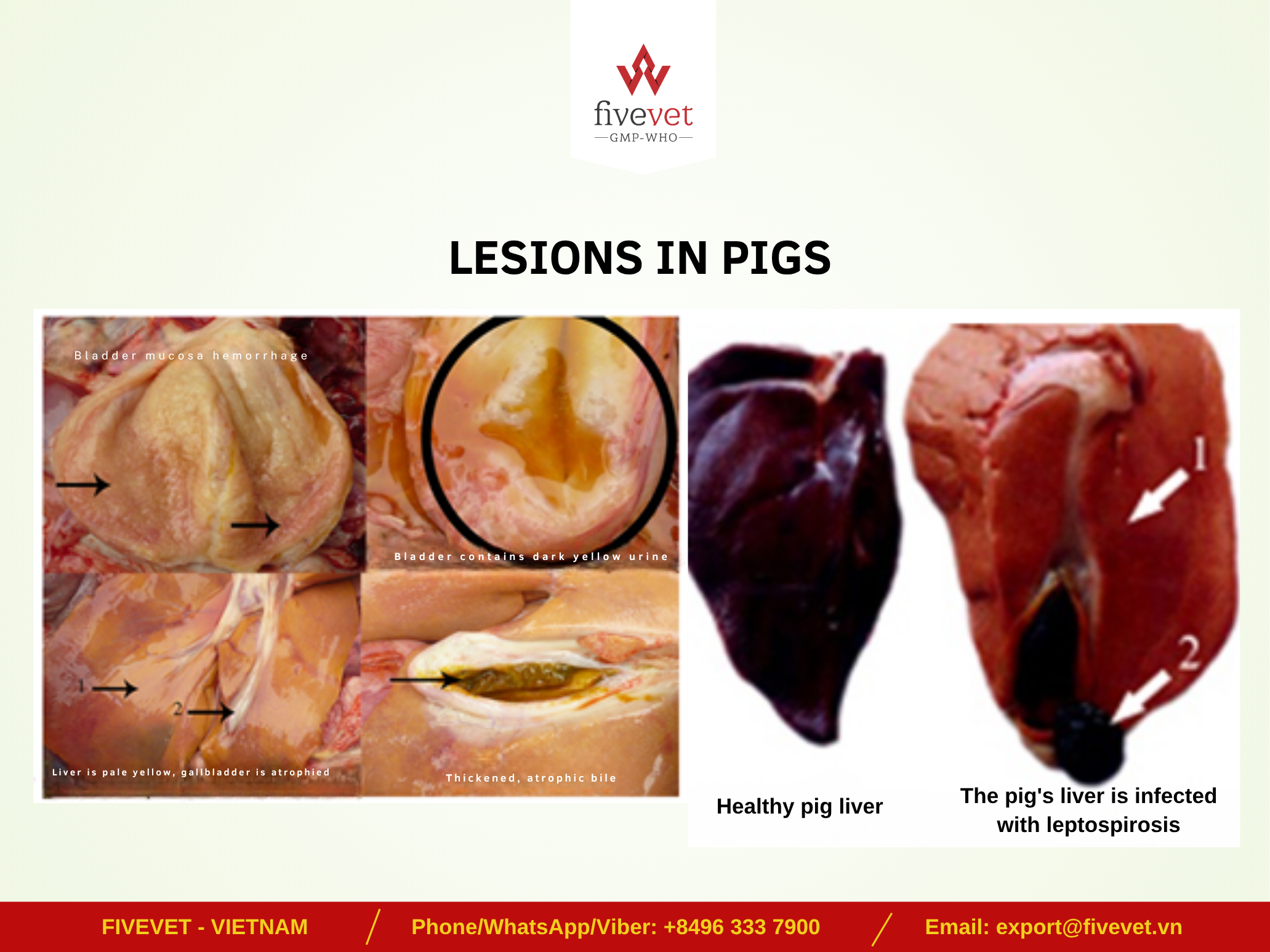
Lesions in pigs
V. Diagnosis of leptospirosis
Specimens are blood, urine, suspected kidney, fetal abomasum, fetal tissue, and urine in case of miscarriage. Send specimens to
FiveLab diagnostic and testing center for fast and accurate results.
VI. Spirochete disease prevention
6.1. Room hygiene Spirochetes
- Spirochetes are very sensitive to common disinfectants; one of the following products can be used:
Five-B.K.G,
Five-BGF,
Five-Iodine,
Five-Perkon 3s,…
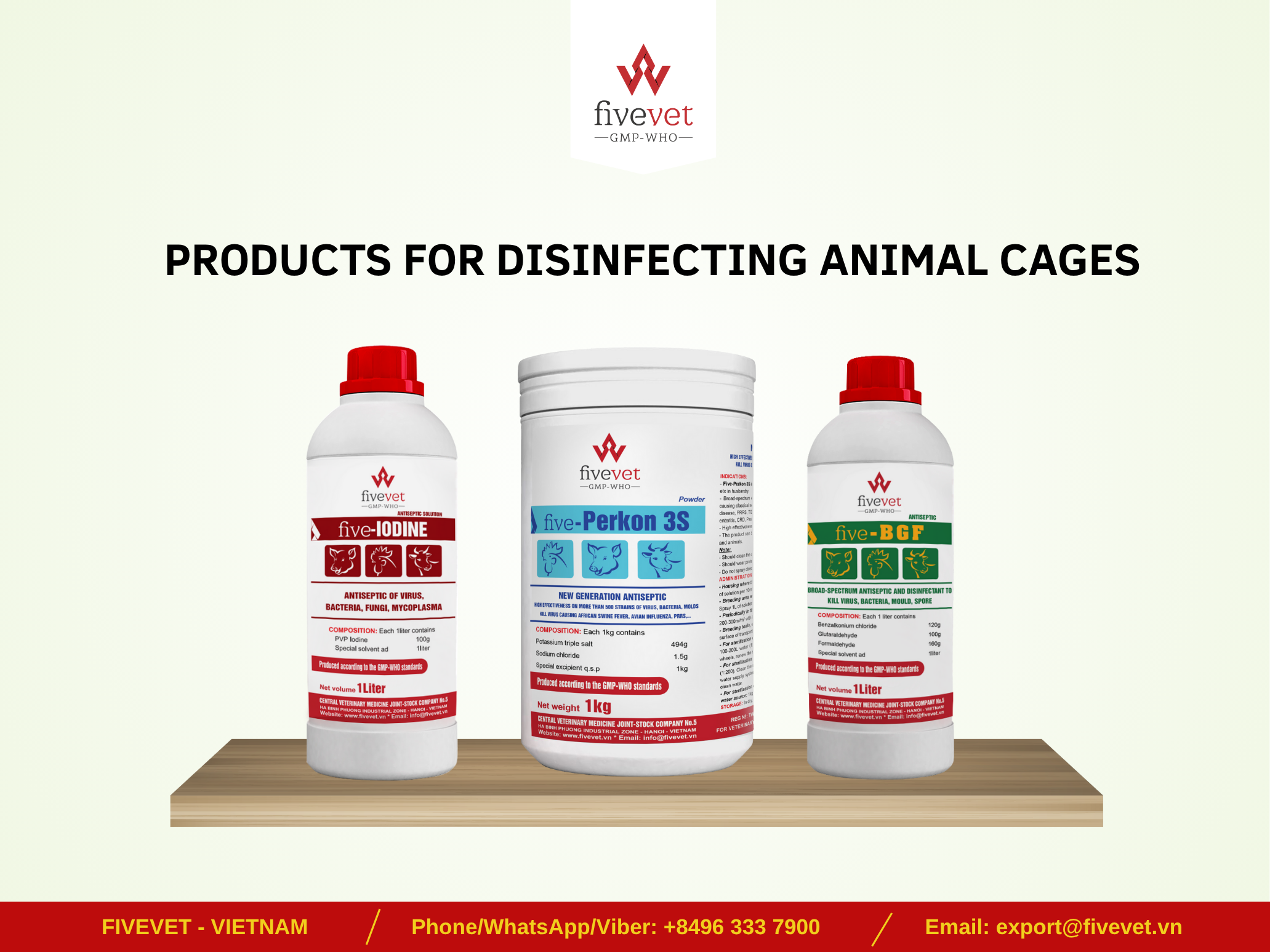
Products for disinfecting animal cages
- Regularly kill rats and prevent contact with pets.
- People at risk of exposure to pathogens need labor protection.
6.2. Prevention by vaccination
- Currently, some bacterins are used to prevent serovars Leptospira canicola (L. canicola), L. icterohaemorrhagiae, L. grippotyphosa, and L. Pomona, causing disease in dogs. The first injection is given to dogs 12 weeks of age or older, the second injection is given after 2-4 weeks, and immunity lasts for 1 year.
- Vaccines for goats and sheep are not yet widely used, and there is no vaccine for horses.
- Pigs are vaccinated with the lepto vaccine at 1 month of age, gilts are vaccinated 1-2 months before mating, and sows and boars are vaccinated twice a year.
- Cattle: Mass vaccination is given twice a year in March-April and September-October.
VII. Treatment of spirochetal disease
- Use one of the following drugs:
Five-Otylin,
Five-Oxylin.LA,
Five-Penstrep.LA,
Five-Streptomycin,
Five-Flo.30… according to the dosage on the product packaging. With one of the following supplements:
Five-Acemin B12,
Five-Fe.B12 20%,
Five-Vitamin B1 (powder),
Five-Vitamin C inj,
Five-Butasal,
Five-Bcomplex inj,…
- Take good care of your livestock to help them recover quickly.
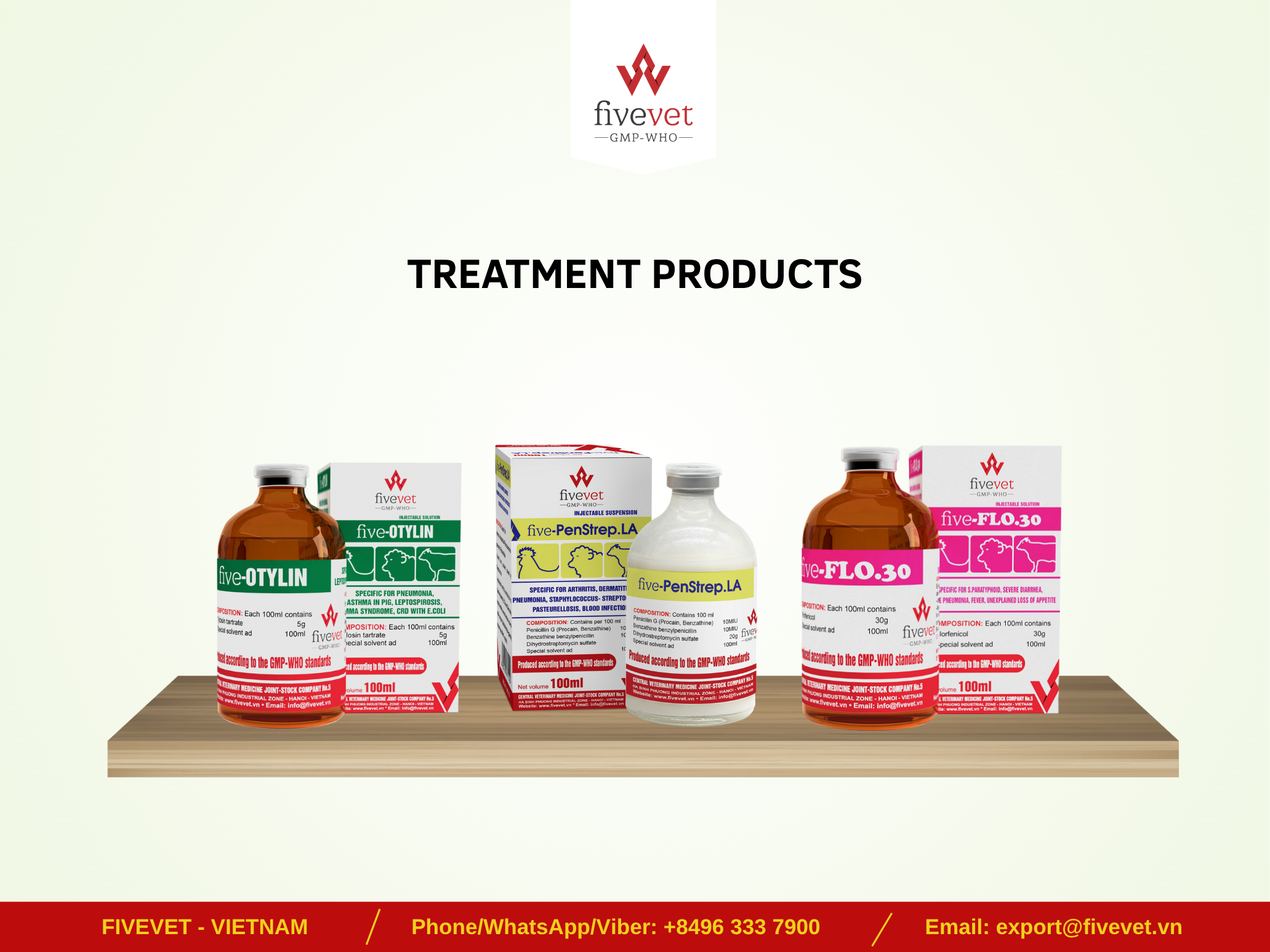
Treatment products
Leptospirosis not only causes economic losses in livestock farming but also has the potential to spread to humans if not properly controlled. Understanding the causes, symptoms and transmission methods will help farmers be more proactive in disease prevention and treatment. Applying strict hygiene measures, regular vaccination and early detection of unusual signs are the keys to protecting livestock from the silent but dangerous attack of leptospirosis. Regularly update your knowledge and practice safe farming to build a sustainable, effective and healthy model for both livestock and caregivers.
 +84 963337900
  info@fivevet.vn
  Login
Login  VN
VN
 ENG
ENG


