The main cause of this disease is that livestock consume large amounts of easily fermentable feed, which accumulates a significant amount of gas in the rumen. When this gas exceeds normal levels, it increases the rumen’s volume, putting pressure on other organs in the abdomen and reducing the liver’s detoxification capacity. At the same time, the volume of the chest cavity is reduced, obstructing the function of the heart and lungs, making it difficult for the animal to breathe and potentially leading to rapid death due to asphyxiation.
The disease typically appears 30 minutes to 1 hour after eating and progresses very quickly.
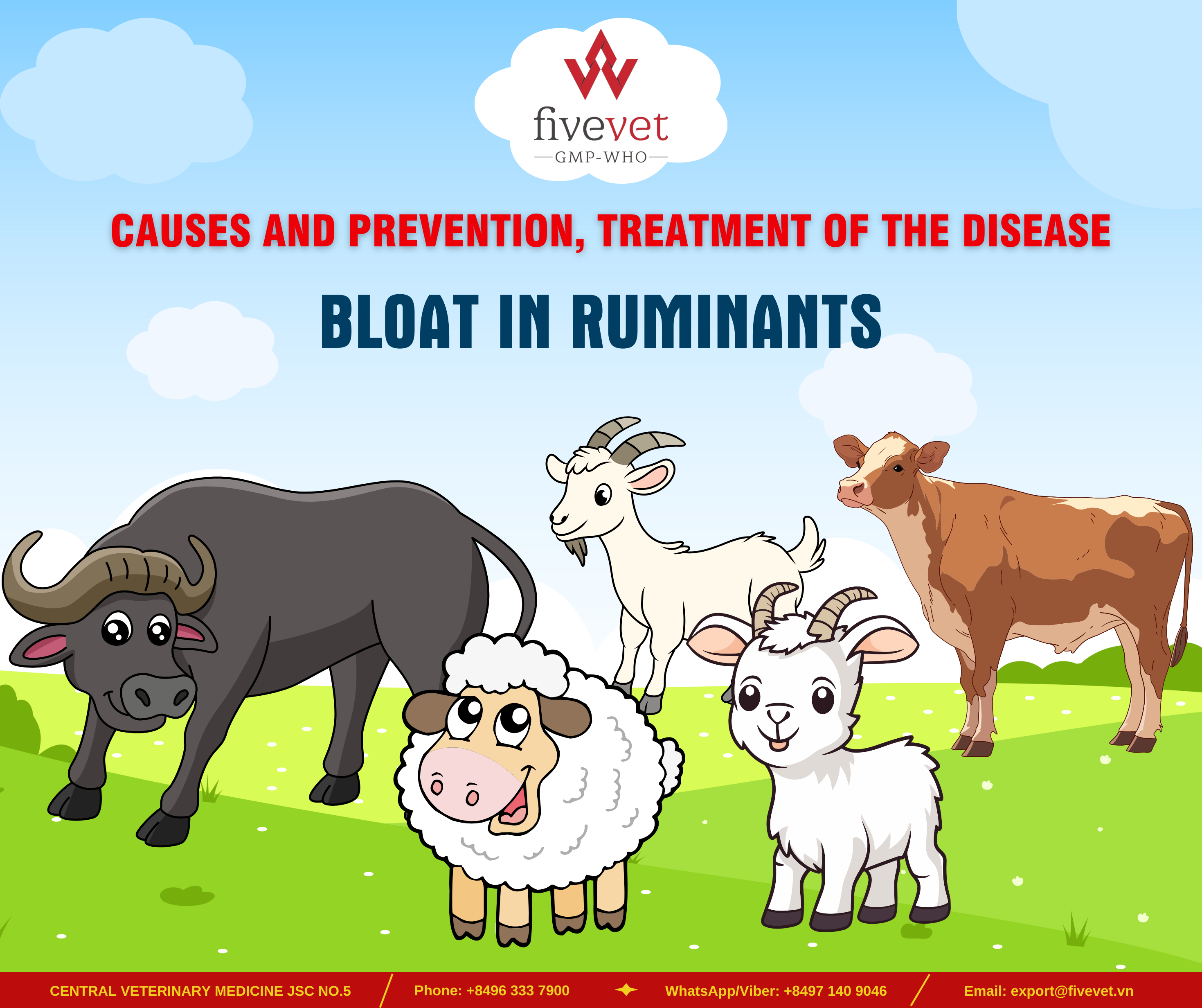
Causes include livestock consuming large amounts of easily fermentable, gas-producing feed: green, water-rich foods like young grass, beanstalks, sweet potato vines, young corn stalks, etc.; feeds high in saponins, such as hibiscus leaves and partially fermented feed, such as decayed plants, grass, straw, brewery byproducts, cassava residue, as well as leftover rice and porridge.
Due to livestock consuming feed containing HCN (cyanhydric acid), such as bamboo shoots or cassava, or feed contaminated with harmful chemicals like organophosphates. Poisoning may also result from carbamate toxicity.
When cattle are overworked or there is a sudden change in weather, the digestive system can be severely impacted. This condition can also arise from infectious diseases like influenza, hemorrhagic septicemia, anthrax, or other internal issues such as rumen atony, reticulitis, peritonitis, esophageal paralysis, or blockage. Additionally, if cattle remain recumbent for extended periods and cannot burp, this easily leads to digestive disorders.
Symptom
The disease typically develops very quickly, within 30 minutes to 1 hour after eating. When the disease begins, the animal often shows signs such as a visibly distended abdomen, abdominal pain, restlessness, and frequent movement around a post. The animal may lash its tail forcefully against the left side of the abdomen to alleviate discomfort. When tapping on the left flank area, the sound produced is mostly a drum-like resonance, while dull and bloated sounds may be reduced or absent. Pressing on the rumen area feels tense, like pressing on an inflated rubber ball.
When listening to the rumen area, initially, increased ruminal motility may be observed, but this gradually decreases and eventually disappears. At this point, only faint popping sounds from the fermentation of the feed can be heard. As the disease progresses, the symptoms become more severe: the livestock’s abdomen continues to enlarge, with the left flank area protruding noticeably and possibly even higher than the external tip of the hip bone. The animal experiences clear abdominal pain, sweating, lethargy, and anxiety, ceasing to eat and ruminate. The livestock also has difficulty breathing, with an increased respiratory rate, extending its front legs to breathe, or sticking its tongue out to assist with breathing.
The circulatory system of the animal becomes disrupted, and blood in the neck and head cannot return to the heart, leading to distended jugular veins, rapid heart rate (140 beats per minute), weak pulse, and low blood pressure. The animal may fall into a coma and die quickly from asphyxiation and poisoning. Fresh blood may be present at the nostrils and anus, and there may be signs of a prolapsed rectum.
Due to the rapid progression of this disease, if it is not detected early and treated promptly, the animal will experience respiratory and circulatory disturbances: asphyxiation, acidosis poisoning and cerebral hemorrhage, leading to death.
Diagnose
Diagnosis of the disease should be based on the characteristic signs and symptoms. The disease typically appears and progresses rapidly, within 30 minutes to 1 hour after eating. The left abdomen of the animal will be visibly distended. When tapping the rumen area, a drum-like sound will resonate throughout this region. Pressing on the rumen will feel tense, like pressing on an inflated rubber ball. If a trocar is inserted into the rumen, a large amount of gas will escape forcefully through the needle hole. The animal will experience severe difficulty breathing.
During diagnosis, it is necessary to distinguish it from ruminal overload: this condition progresses slowly (appearing 6 – 9 hours after eating). When tapping the rumen area, an area of absolute dullness can be detected. Pressing on the rumen leaves an indentation that remains after the hand is removed.
Treatment
The main principles for treating this disease are: the most crucial step is to find ways to release the gas from the rumen, purge all feed from the rumen, inhibit the fermentation and gas production of feed in the rumen, restore and enhance ruminal motility and strengthen supportive and restorative care for the affected animal.
Animal nursing and care
To help livestock release gas, position the animal with its head elevated and hindquarters lowered. Gas can be released by pulling the animal’s tongue in rhythm with its breathing and thoroughly cleaning the rectum of feces. Massage the rumen area with hay or straw 2–3 times a day for 10–15 minutes each time. If a large amount of gas accumulates in the rumen, causing the animal to show signs of asphyxiation, a trocar must be used to release the gas and prevent dangerous complications. (If cattle or buffalo experience frothy bloat, the gas bubbles may block the trocar needle, hindering gas release. In this case, dissolve 25–30g of ZnO in 100–150ml of clean water and inject it into the rumen to break up the gas bubbles, allowing the gas to escape.
When the animal recovers and can eat again, it should only be given fibrous feeds such as straw and hay. Avoid feeding it easily fermentable and gas-producing feeds such as young grass, bran, corn, and sweet potatoes,...
Use medicines for treatment
Enhance gas release from the rumen: Apply MgSO4 or Na2SO4 to the oral mucosa.
To purge the contents of the rumen in animals, one of the following medications can be used: magnesium sulfate or sodium sulfate. Dosage: Buffaloes and cattle: 300–500g, goats and sheep: 100–200g. Administer orally once on the first day of treatment. Alternatively, a 20% magnesium sulfate solution can be injected at a dose of 1ml per 10kg Bw.
To inhibit gas-producing fermentation by microorganisms in the rumen, administer one of the following:
+ Garlic alcohol solution: crush 3–4 garlic cloves, mix with 100ml alcohol and 1 liter of clean water.
+ Pickle juice: 1–1.5 liters.
+ Vinegar solution: mix 500ml vinegar with 1 liter of clean water.
+ Lemon or sour starfruit juice: squeeze the juice and give it to the cattle.
+ Draft beer: 3–5 liters per animal.
To restore and enhance ruminal motility, one of the following medications can be used:
+ Strychnine B1 or strychnine sulfate 0.1%: Dosage:
Buffaloes and cattle: 20–30 ml,
goats and sheep: 5–10 ml. Administer intramuscularly or subcutaneously 2–3 times, once per day.
+ Pilocarpine 3%: Use with caution to prevent rumen rupture.
Note: Do not use Strychnine or Pilocarpine on pregnant livestock, as they may cause miscarriage.
Use one of the following broad-spectrum antibiotics:
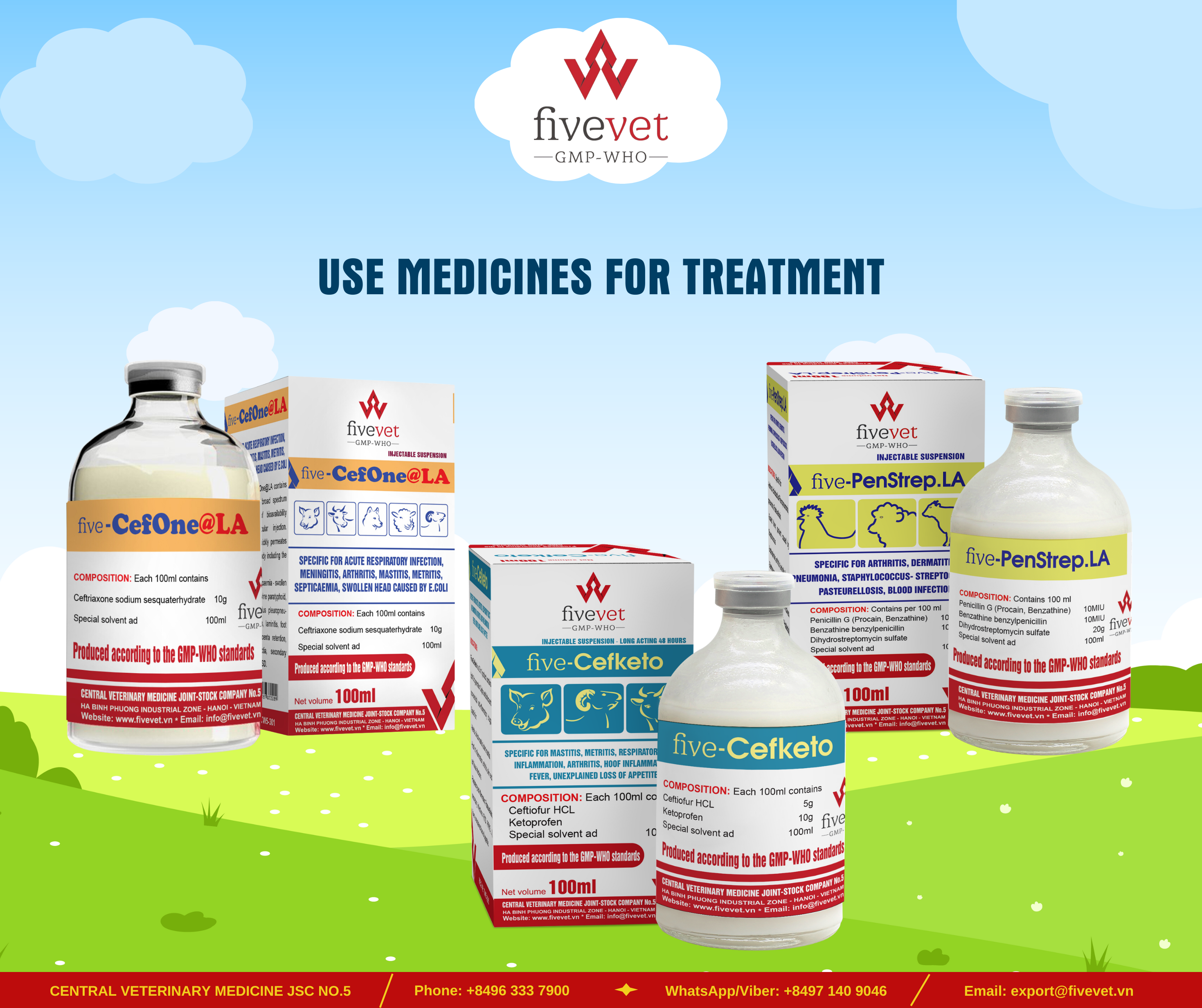
Five-Cefketo,
Five-Cefone@LA,
Five-PenStrep.LA,
Five-Enroclofenac, … Combine with one of the following supportive care medications:
Five-Acemin.B12,
Five-Vitamin B1 inj,
Five-Butasal,
Five-ADE Inj,
Five-Vitamin C,…
 Prevention
Clean and sanitize barn and grazing areas, providing clean food and water for cattle and buffaloes. During the fresh grass season, limit the intake of too many green roughage animals (provide stored dry feed before letting the animals out to graze). Regularly disinfect the barn with one of the following substances:
Five-Iodine,
Five-BGF,
Five-B.K.G,
Five-Perkon 3S,…
Administer all necessary vaccines, such as Hemorrhagic Septicemia, Foot-and-Mouth Disease, Lumpy Skin Disease,...
Regularly deworm using one of the following medications:
Five-Alben.100 Oral,
Five-Ivertin.100 Oral,
Five-Leva,
Five-Mectin 100,.. To treat insects, ticks, mites,... use one of the following medications:
Five-Permethrin,
Five-Butomec,
Five-Cymethrin,…
 +84 963337900
  info@fivevet.vn
  Login
Login  VN
VN
 ENG
ENG


