1. Disease characteristics
Streptococcus (Gram-positive) is a common pathogen affecting both animals and humans. This bacterium can survive for extended periods in feces, dirt, pig carcasses, and on insects such as flies. The disease can be transmitted through the respiratory system, bodily secretions, and blood of infected pigs, as well as through direct contact or contaminated tools like syringes. Open wounds (from tooth clipping, umbilical cutting, tail docking, ear notching, etc.) also serve as transmission pathways. Piglets can contract the infection from their mother through respiratory, digestive, and circulatory systems.
The disease is characterized by meningitis, endocarditis, pneumonia, septicemia, gastrointestinal issues, arthritis, skin hemorrhages, causing miscarriage, and sudden death in pigs. It primarily affects suckling piglets and post-weaning pigs.
2. Symptoms
Suckling piglets: Symptoms often manifest as meningitis and encephalitis. Affected piglets become lethargic, stop feeding, have swollen throats, difficulty swallowing, difficulty walking, erect hair, red skin, and fever. Neurological symptoms include tremors, eye-rolling, head tilting, with or without arthritis. The joints become swollen, tender, hot, and painful to touch, with pus observed when dissected. In the later stages, piglets exhibit a "paddling" motion and eventually die.
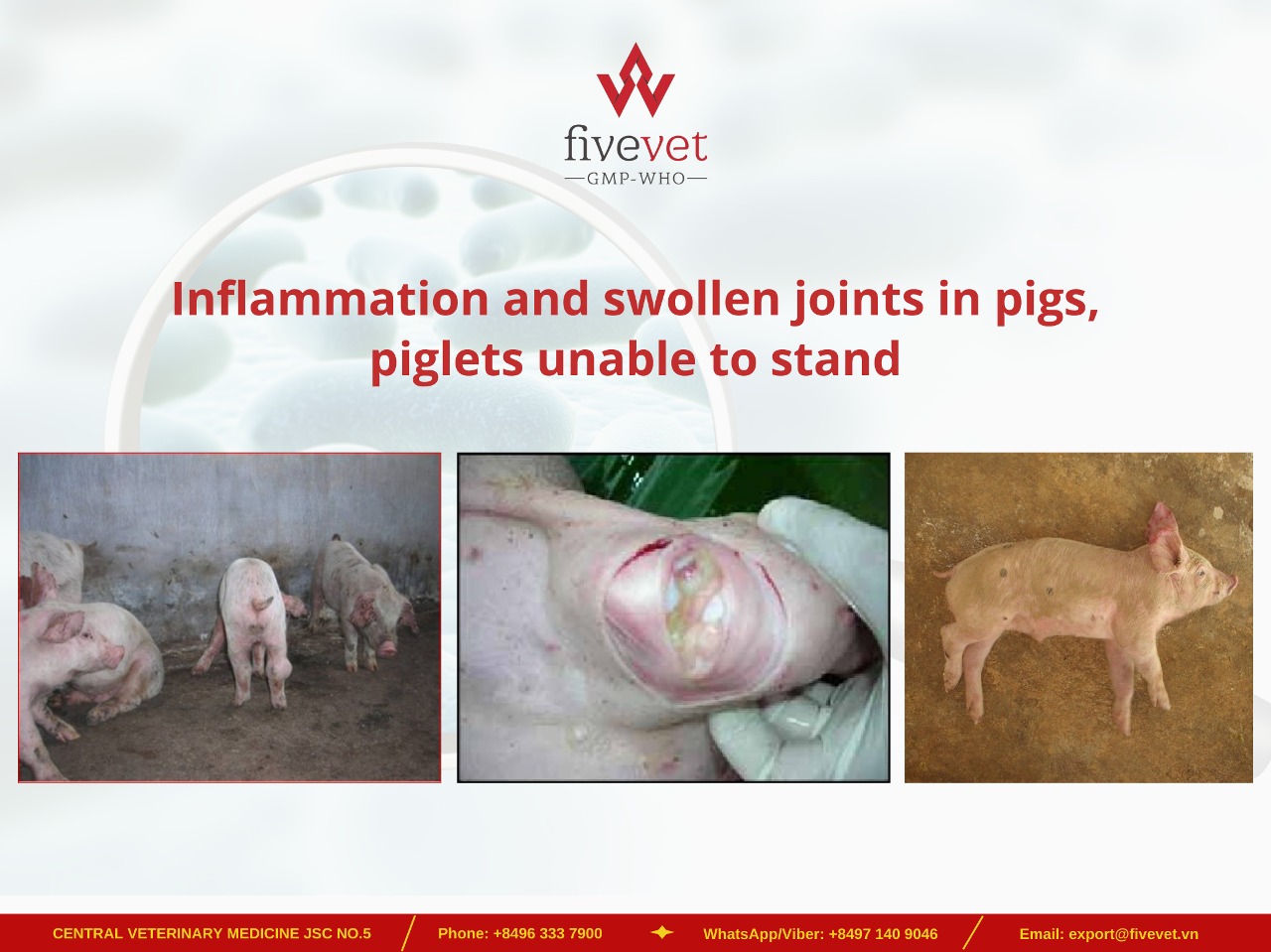
Inflammation and swollen joints in pigs, piglets unable to stand
Weaned pigs: Typically exhibit high fever up to 42.5°C, stop feeding, lethargy, and limping due to joint pain.
Very acute form: Pigs can die rapidly without showing clear symptoms. Early signs include neurological symptoms like staggering or unsteady standing, followed by the inability to stand, seizures, and eye twitching. The pigs may exhibit a staring gaze, red eye membranes, and difficulty moving. When lying down, they show a paddling motion, become paralyzed, and foam at the mouth. The bacteria can invade the circulatory system, causing septicemia, arthritis with excessive joint fluid, pneumonia, and hemorrhages. Meningitis and brain hemorrhage may also occur.
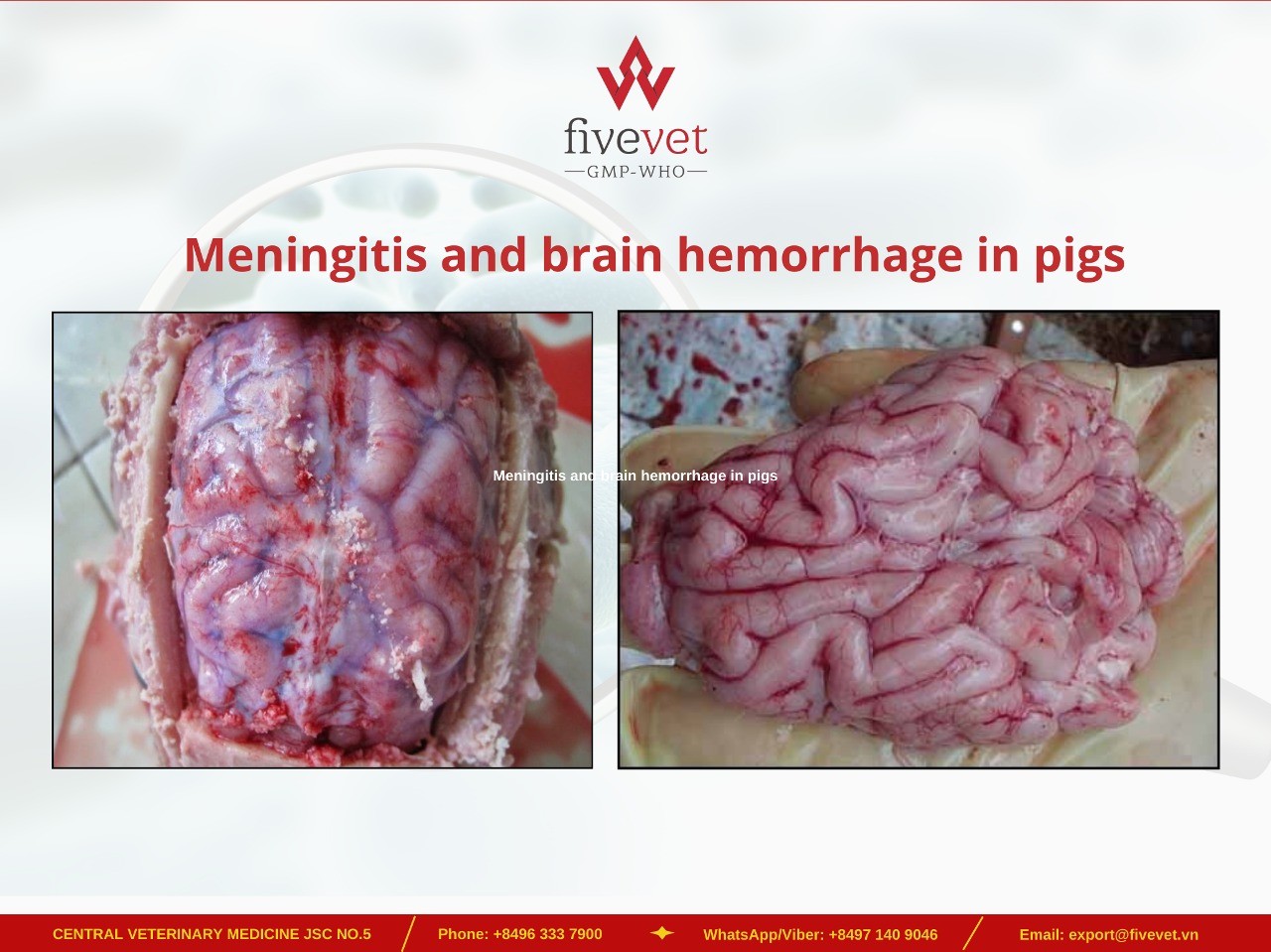
Meningitis and brain hemorrhage in pigs
Fattening pigs: Adult pigs tend to show fewer visible external symptoms, but the typical lesions include ulceration and vegetative endocarditis
Observations include excessive mucous discharge from the vulva, signs of miscarriage, cloudy urine mixed with blood or pus, resulting from inflammation of the uterus, vagina, or bladder.
3. Diagnosis
Based on the farm's medical history and clinical symptoms. Sampling from the lungs, spleen, heart, liver, brain, and joint fluid to detect the disease by PCR method or bacterial culture isolation.
4. Prevention and treatment
4.1. Prevention
Implement proper biosecurity measures in farming. Keep barns dry, warm, maintain appropriate stocking density, and ensure good ventilation. Periodic disinfect the area using one of the following disinfectants:
Five-Iodine,
Five-BGF,
Five-B.K.G,
Five-Perkon 3S, spraying twice a week.
For procedures like tooth clipping, umbilical cutting, and tail docking in piglets, tools should be dipped in
Five-Iodine solution, inject
Five-Amox.20@LA 0.3 ml/piglets to prevent inflammation and infection. Use one needle per pig or one needle per litter.
Use one of the following antibiotics to mix periodically for post-weaning piglets as a preventative measure:
Five-Amoxcin super,
TW5-Amox.600,
TW5-Doxy.500,
Five-Tylvasin,
TW5-Tilmo Super Oral,
Five-DoxColis,
Five-Paflo,
Five-Tialin. Dosages should follow the product label recommendations, with a treatment duration of 3-5 days.
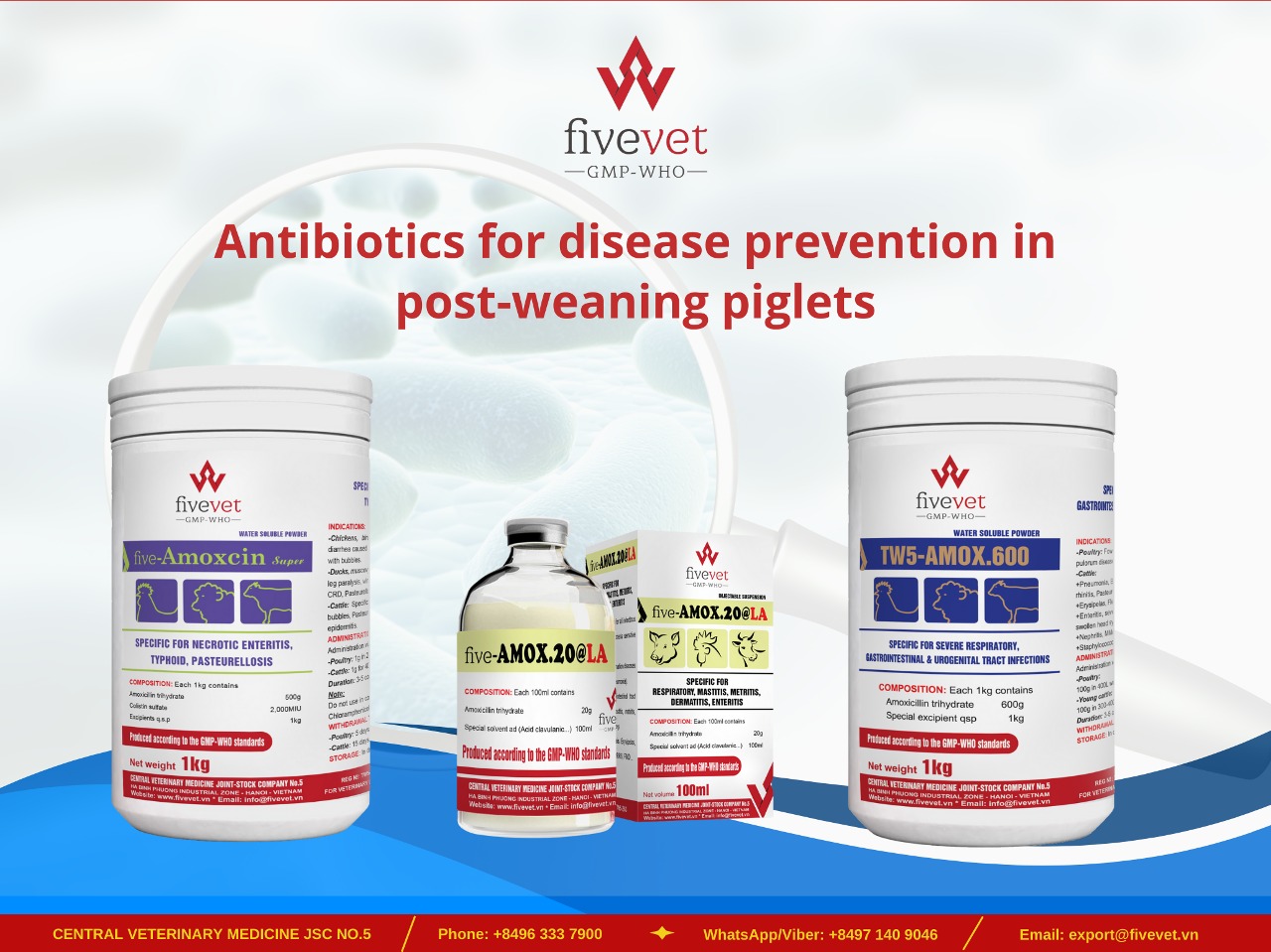
Antibiotics for disease prevention in post-weaning piglets
Supplement with vitamins, minerals, and digestive enzymes such as
Five-Enzym,
Five-Men song,
Five-Orgacid, and
Five-LacEnzym garlic. Treatment duration: 3-5 days.
4.2. Treatment
- Move infected pigs to an isolation barn for intensive monitoring and treatment.
- Ensure thorough cleaning and disinfection of barns using disinfectant solutions like
Five-Iodine,
Five-BGF,
Five-B.K.G, etc.
* Individual treatment:
- For fever reduction, use one of the following products:
Five-Gluco.KC namic,
Five-MetaMax.50,
Five-Anagin.C,
Five-Clofenac, etc. Duration: 3-5 days.
Note: For pigs with arthritis, inject
Hado-Dexa or
Five-Ketofen
- Use one of the following specific antibiotics:
Five-PenStrep.LA,
Five-Amox@.LA,
Five-Genamox, etc. Duration: 3-5 days.
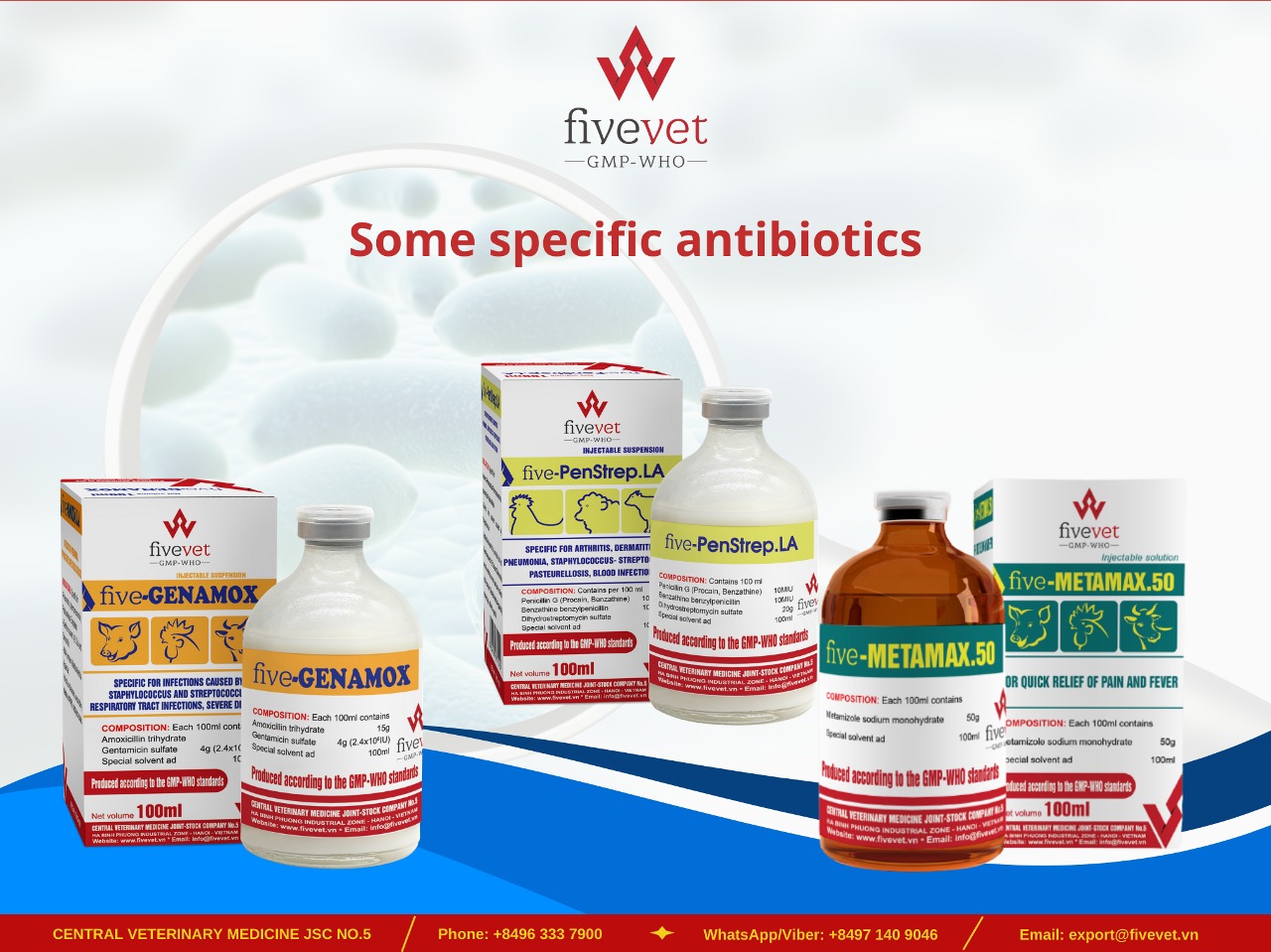
Some specific antibiotics
For supportive treatment, use one of the following products:
Five-Butasal,
Five-ADE Inj, etc. Duration: 3-5 days.
* For the entire herd
- Mix one of the following antibiotics into feed:
Five-Amoxcin super,
TW5-Amox.600,
TW5-Doxy.500.
- Supplement feed with digestive enzymes, vitamins to improve digestion and recovery:
Five-Orgacid,
Hado-LacEnzym garlic,
Five-Enzym,
Five-Men song, etc. Dosage and usage instructions should follow the product labels. Treatment duration: 3-5 days.
- Detoxify the body with products like
Five-Bogama,
Five-Orgamin, etc.
 024 3376 6868
  info@fivevet.vn
  Đăng nhập
  VN
VN
 ENG
ENG


