1. Causes of bronchitis
Dogs and cats can have bronchitis for a variety of reasons. Pets inhaling dust or harmful substances from their surroundings, such as cigarette smoke, car exhaust, or cleaning agents, is one of the most frequent causes. These irritants harm the mucosa of the respiratory system, which makes it easier for germs and viruses to infiltrate.
Infectious agents are another frequent cause. The illness can be brought on by parasites like lungworms, heartworms, and Aspergillus fumigatus fungus, as well as bacteria including Streptococcus, Staphylococcus aureus, and Klebsiella pneumoniae. These substances cause inflammation and respiratory symptoms by attacking the bronchial mucosa.
In particular, pets with weakened immune systems, such as elderly dogs and cats, or those with underlying diseases such as diabetes or heart disease, are more susceptible to the disease. These factors make it difficult for pets to fight off pathogens, increasing the risk of bronchitis.
2. Symptoms of bronchitis
Symptoms of bronchitis are often easy to recognize. Pets with the disease often have a persistent cough, which can be dry or productive. In particular, difficulty breathing is a common sign with wheezing, and a rattling sound can be heard in the lungs when the pet breathes. Other symptoms include watery eyes, nasal discharge with fluid that can be clear or cloudy, depending on the severity of the infection.
In addition, pets with bronchitis often have a fever, with body temperature ranging from mild to high (39.5 - 40ºC). They often become tired, stop eating, and have a marked decrease in activity. These signs indicate that the pet's body is struggling with a respiratory infection and needs to be closely monitored.
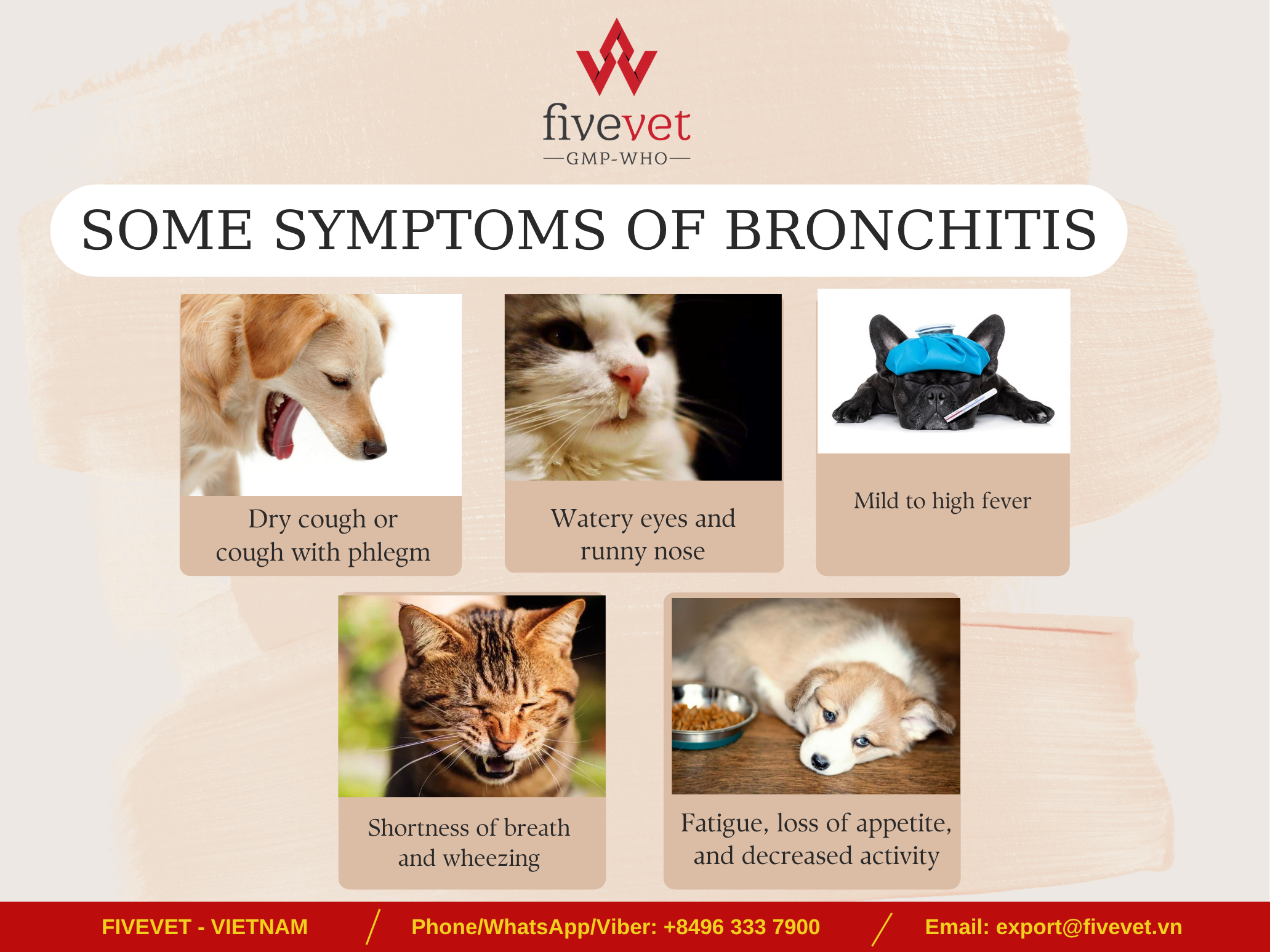 Some symptoms of bronchitis
3. Diagnostic methods
To diagnose bronchitis in dogs and cats, your veterinarian will begin with a clinical examination, looking for external symptoms such as coughing, difficulty breathing, watery eyes or nasal discharge. A clinical examination helps to assess the general health of your pet.
Next, a chest X-ray is an important method to check the condition of the lungs and bronchi, helping to determine the level of inflammation or airway obstruction. In some cases, blood tests will be performed to detect signs of infection or inflammation in the body.
In addition, bronchoscopy may be indicated in cases of suspected foreign bodies, tumors or when a sample of bronchial fluid needs to be taken for analysis. This method helps to accurately determine the cause of the disease and assess the level of damage to the respiratory tract.
4. Treatment regimen
In the treatment of bronchitis in dogs and cats, the use of antibiotics is an important factor in controlling the infection. Antibiotics such as
Five-Amox@.LA, Five-Genamox, Five-Gentoxcin, and
Five-Azicin are popular choices, helping to control the infection and kill many different types of bacteria.
Controlling cough symptoms is an important part of the treatment process. If using an expectorant, it is necessary to avoid using antitussives at the same time to ensure the effectiveness of the treatment.
Five-Bromhexin Inject is a popular drug that reduces secretions and thins phlegm. When controlling a dry or persistent cough, Codeine is often chosen because of its rapid cough-relieving effect. Salbutamol is a bronchodilator that is commonly used to support breathing and reduce difficulty breathing safely and effectively.
Your veterinarian may prescribe anti-inflammatory drugs such as
Five-Ketofen to relieve pain and inflammation. Prednisolone is a popular choice for controlling inflammation and reducing swelling. In addition to treating infections and controlling symptoms, boosting your pet's immune system is also important in the recovery process.
Five-ADE Inj helps supplement essential vitamins and supports rapid recovery.
Five-ATP is a product that helps improve overall health, provides energy, and supports your pet's natural immunity. Effective treatment of bronchitis requires a combination of controlling infections, reducing symptoms, and boosting your pet's immune system.

Some drugs used in the treatment of bronchitis
5. Preventing bronchitis
One crucial aspect of safeguarding pets' health is preventing bronchitis in dogs and cats. First and foremost, keep your home airy and clean, free of dust and harmful substances. For the sake of their health, pets in households with smokers or those who use cleaning products must not be exposed to or breathe in these irritants.
Another significant component in improving the resilience of cats and dogs is to keep a diet that is suitable and balanced. Make it a priority to choose high-quality foods that are high in vitamins and minerals to help your pet's natural immune system work properly. Always monitor your pet's health and pay attention to unusual signs such as coughing, difficulty breathing, watery eyes, or a runny nose. If symptoms persist, take your pet to the vet for prompt examination and treatment. Prevention is better than cure, and proper care will keep your pet healthy and happy.
6. When should I take my pet to the vet?
If your pet shows symptoms such as persistent cough, severe difficulty breathing, high fever or loss of appetite, take them to the vet immediately. These are warning signs that the condition is becoming serious and requires timely medical intervention. In particular, if your pet shows signs of wheezing, rapid breathing, or coughing up phlegm or bloody phlegm, immediate medical examination is extremely important.
In addition, do not arbitrarily give your pet medication without a veterinarian's prescription. Using the wrong type of medication or incorrect dosage can make the condition worse, causing unwanted complications. To protect the health of your four-legged friend, always consult a specialist.
7. Message to owner
Bronchitis in dogs and cats is a common disease, but can be prevented and treated effectively if detected early. To protect your pet's health, you should ensure a balanced diet, choose foods rich in vitamins and minerals to enhance natural resistance. Regular vaccination against respiratory diseases is an indispensable measure, especially for dog and cat breeds that are sensitive to respiratory diseases. Don't forget to monitor your pet's health, pay attention to unusual signs such as coughing, difficulty breathing, watery eyes or a runny nose. When you detect prolonged symptoms, take them to the vet for timely examination and treatment. Prevention is always better than a cure, and proper care will help your pet stay healthy and happy.
Remember, taking care of your pet's health is not only a responsibility but also your love and care for your four-legged friend. Don't forget to follow our website for more useful updates on veterinary care and the best health support products for your pet.
 +84 963337900
  info@fivevet.vn
  Login
Login  VN
VN
 ENG
ENG


